cslave's pick · Updated September 2026
Basics Air Circulator Fan
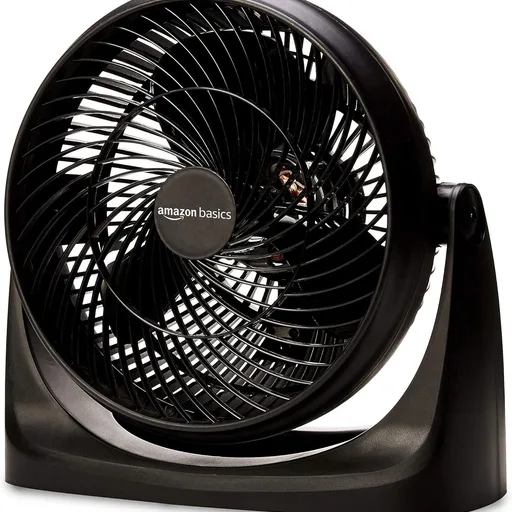

A small desk fan like this may suit someone who wants targeted air movement without giving up much space on a nightstand, work table, or home office corner. The compact footprint and lightweight build make it easier to move between rooms than a larger floor fan, and the 90-degree tilt head is the main feature to pay attention to if you want to aim airflow upward, downward, or across a narrow area. Three speed settings give it a straightforward setup, which is useful when you want simple controls instead of a more complicated panel.
This kind of fan is worth considering if the main need is personal cooling rather than whole-room circulation. A desk-size air circulator can be a good fit for someone in a bedroom with limited surface space, someone working at a desk for long stretches, or someone who wants extra air movement near a bed or sofa. The listed 70-watt power draw suggests it is in the range of a more forceful small fan, so the useful question is less about style and more about whether that airflow level matches the room and placement you have in mind.
One practical tradeoff to check is how much noise you are comfortable with at each speed. Desk fans often solve the space problem but create a separate question about sound, especially if the fan will run while you sleep or during calls. It is also worth verifying whether the fan head and base height work with your intended surface, since a compact fan can still feel awkward if the tilt range or angle does not line up with where you sit or lie down. Cord length, grill spacing, and cleaning access are all small details that matter more in daily use than they do on a product listing.
The evidence posture here is intentionally limited. The title gives enough to describe the category, the size, and the controls, but not enough to claim how strong the airflow feels in a real room, how quiet it runs, or how well it holds up over time. That means the best approach is to treat this as a feature checklist and confirm the details that matter most to your space before buying.
Overall, this may fit someone who wants a basic, space-saving fan with a simple control set and a tilt head that helps direct air where it is needed. If you want a compact option for a bedroom, office, or small shared room, it is the kind of fan that could make sense as long as the airflow, noise level, and placement all line up with your setup.
Amazon product links on this guide are not currently affiliate links. Neither cslave nor Buyer Field Guide earns an affiliate commission from them.
See current price